Summary:
-
-
-
Peer‑to‑peer (P2P) networking is live on the Algorand mainnet.
-
P2P is opt‑in today: HYBRID mode ships disabled by default, allowing node operators to adopt it at their own pace, as data consumption may vary.
-
Built on go‑libp2p, the upgrade removes any dependency on Repeater node bootstrap lists, improving decentralization and censorship resistance.
- Operators can enable P2P with a simple config flag and run in hybrid mode while the network transitions.
-
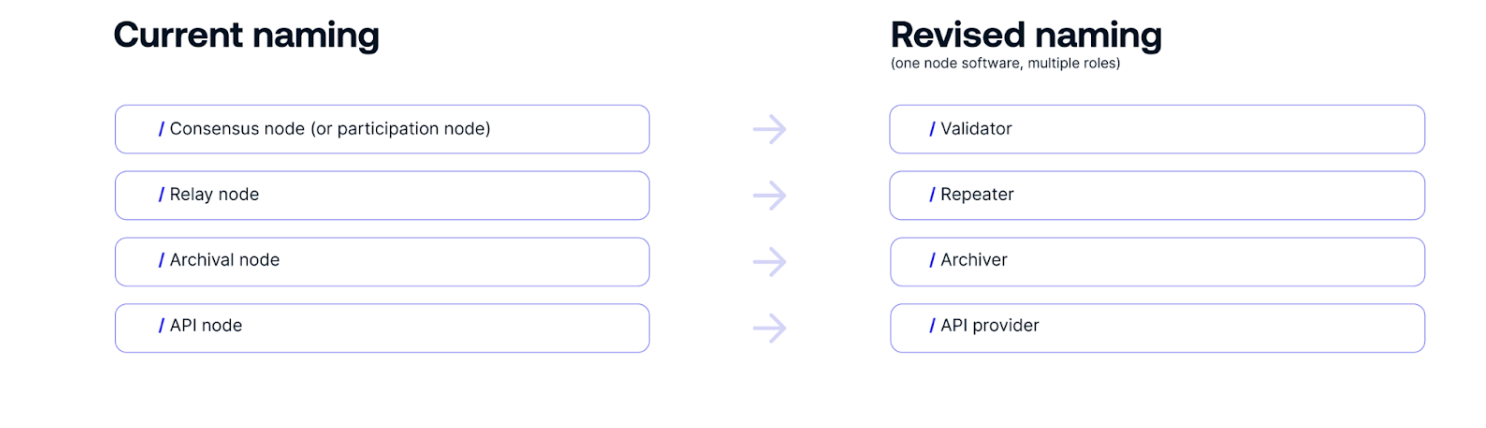
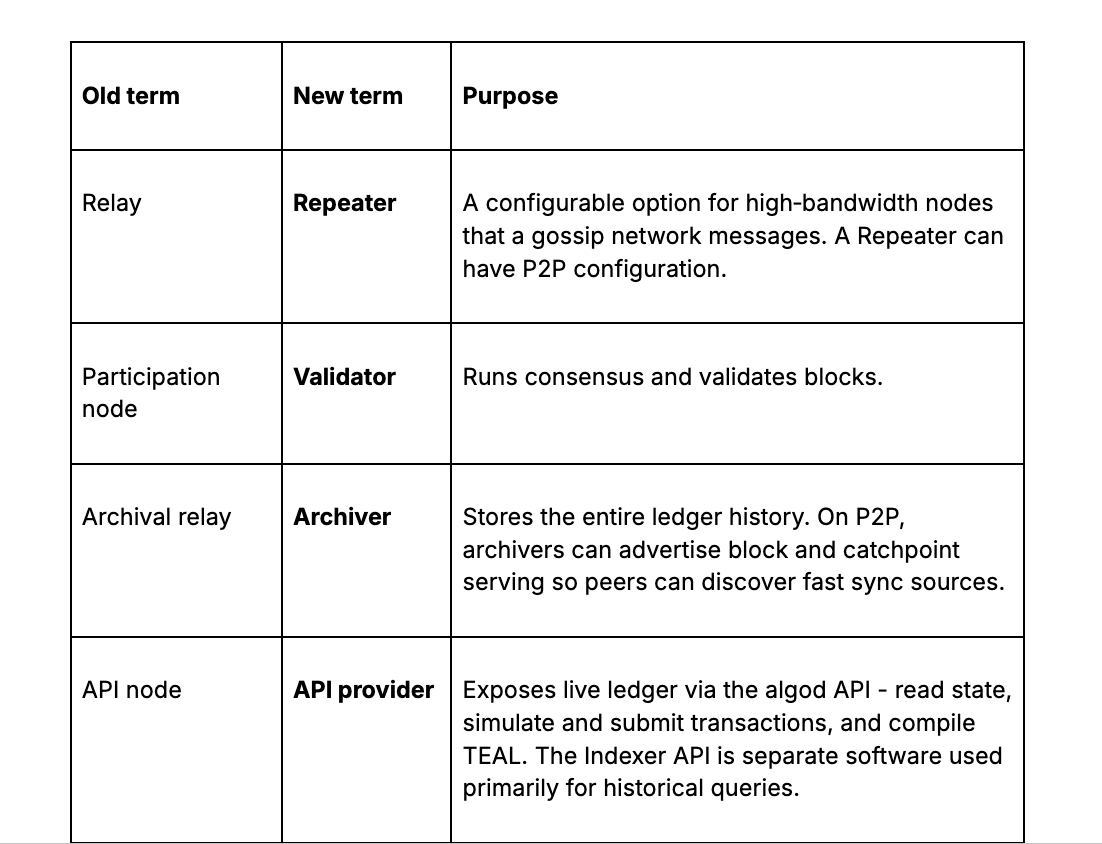
New node role names (Repeater, Validator, Archiver, API provider) clarify what each machine does in a multi-topology network.
-
We’ve included a short animation to explain P2P; feel free to share it with your friends in the Web3 community!
-
-
Note: enabling P2P may reveal your node’s IP to the Repeaters you connect to and can increase bandwidth use, so home operators should review their privacy options.
Algorand speaks native P2P
A question in one of the libp2p community calls made us realize that we never formally announced something big: Algorand now speaks native P2P! The feature has been quietly running in production for months and is now ready for its own spotlight.
What is P2P networking in this context?
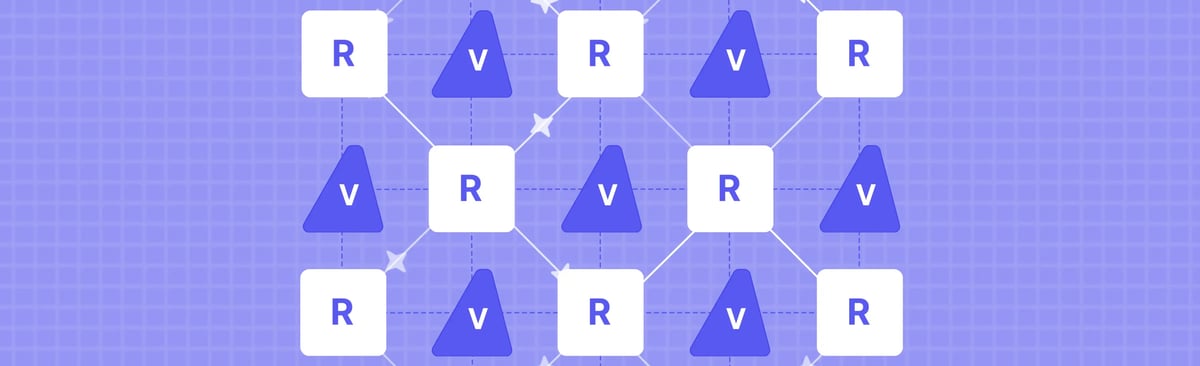
P2P networking lets Algorand nodes auto-discover and connect to Repeaters on a global mesh. Validators make outbound connections to Repeaters, which then propagate blocks, transactions, and participation messages across many independent paths, improving resilience and censorship resistance.
Why P2P matters
-
-
-
Greater decentralization: No single infrastructure provider can throttle traffic.
-
Censorship resistance: Transactions and votes propagate through many independent paths.
-
Higher resilience: Resilience is strengthened through path diversity. If a non-P2P Repeater is degraded, P2P Repeaters will still carry traffic, and vice versa.
-
Lower barriers to entry: Anyone with sufficient resources can contribute propagation power.
-
-
Opt-in by design
P2P is being launched as an opt-in feature. Node operators retain full control over their upgrade path. By default, a fresh install connects to known Repeaters (ie. Repeaters included in the bootstrap list) only. When you enable P2P in Hybrid mode, your node connects to both known and auto-discovered Repeaters.
If you enable P2P without enabling Hybrid Mode, it connects only to auto-discovered Repeaters and will not connect to known Repeaters. Hybrid is off by default while the network rolls out and operators test.
For more information, check the developer documentation.
Privacy and bandwidth notes
By default, enabling P2P will only make outbound connections from your node to Repeaters on the mesh. The Repeaters you connect to will see your public IP. Previously, only known Repeaters saw it. You can allow inbound connections if you choose, but it is not required. This change improves openness but may not suit everyone running a node from home.
Who sees your IP: the specific Repeaters your node connects to in Hybrid or On. In Off, only known Repeaters can.
Inbound connections: off by default; enable only if you want to accept peers.
Bandwidth: P2P can increase data usage. Monitor after enabling.
Ways to limit exposure: run your node in the cloud or through a trusted provider if you prefer not to expose a residential IP.
New node role names
New labels align with broader industry terminology and clarify that nodes exchange data via Repeaters, not directly with one another.
How it works (high‑level)
-
-
Transport: Single TCP connection multiplexed with libp2p’s Yamux.
-
Gossip: Transactions spread via gossipsub with adaptive fan‑out.
-
Peer discovery: Bootstrap DNS seeds, followed by a Kademlia DHT, keep peer lists fresh.
-
Catch‑ups: Blocks and votes stream over HTTP‑over‑libp2p for efficiency.
-
Sybil resistance: Peer‑scoring and rate‑limiting discourage spam and eclipse attacks.
-
To learn more, please refer to the README-P2P.md in the Algorand repo.
The path to full P2P: Making the switch
When Algorand’s target steady state is HYBRID, known Repeaters remain first‑class performance helpers, while P2P peers provide decentralization and censorship resistance. Pure P2P stays available for operators with specific privacy or threat‑model needs, as Pure P2P shares more connectivity-related details with peers than legacy Relays.
Operator adoption (now → Q4 2025)
-
-
-
HYBRID mode available on mainnet.
-
NodeKit release with P2P switch enabled.
-
Incentive program for community‑run Validators.
-
-
Default P2P (Q1 2026)
-
-
-
New node binaries ship with HYBRID enabled by default.
-
-
Future P2P (Q3 2026)
-
-
-
All consensus and voting data propagate using native libp2p messaging.
-
Consensus messages gain native libp2p support; Repeaters remain optional performance accelerators.
-
-
Why hybrid by default works best
-
-
-
Diversity of paths: Improves resilience to partitions and targeted throttling.
-
Performance headroom: Repeaters absorb bursts and help remote geographies.
-
Operator flexibility: Choose pure P2P when privacy or compliance requires it.
-
Defense in depth: If one layer misbehaves, the other continues to carry traffic.
-
-
Beyond P2P: Network-wide decentralization
P2P is one pillar in a broader effort to remove single points of failure; most of this effort is already live:
-
-
-
Validator diversity: Permissionless participation and accessible tooling encourage a broad set of independent operators.
-
Open‑source tooling: Node software, SDKs, and infra scripts are open source.
-
Permissionless Repeaters: Anyone can run a high-bandwidth Repeater and make it auto-discoverable on the P2P mesh.
-
Decentralized governance: Token holders help set ecosystem priorities through xGov, and protocol upgrades follow a public release process with transparency and community input. This area continues to evolve.
-
-
P2P's impact on builders
Developers and dApps do not need to change anything. P2P strengthens propagation and resilience at the networking layer. In practice, nodes learn about new blocks and transactions sooner, through more independent paths, improving responsiveness for clients and wallets. If you operate infrastructure, enabling HYBRID mode is a one-line config change. After enabling, you can monitor bandwidth, peer counts, and catch-up times.
Getting started
Full docs are available in the “Node Configuration Settings” section of the Algorand developer portal.
Watch & share
We produced a short animation that explains P2P in less than two minutes, perfect for sharing in the libp2p community. Watch the video and spread the word.
Try P2P today
Join us in this exciting update for the network!
-
Flip the switch: try HYBRID mode on your Validator or run a standalone Repeater.
-
Join the conversation: have questions? Join our Discord.
-
Share your feedback: your comments on Discord help us understand what you need to make the switch.
To learn more, please visit our Developer Portal P2P guide and Funk's Ultimate Node Controller (FUNC) information.
P2P is another step in our mission to build a borderless, permissionless, and resilient blockchain. Thanks for being part of the journey!
Disclaimer: The content provided in this blog is for informational purposes only. The information is provided by the Algorand Foundation and while we strive to keep the information up-to-date and correct, we make no representations or warranties of any kind, express or implied, about the completeness, accuracy, reliability, suitability, or availability with respect to the blog or the information, products, services, or related graphics contained in the blog for any purpose. The content of this blog is not intended to be legal, financial, or investment advice nor is it an endorsement, guarantee, or investment recommendation. You should not take any action before conducting your own research or consulting with a qualified professional. Any reliance you place on such information is therefore strictly at your own risk. All companies are independent entities solely responsible for their operations, marketing, and compliance with applicable laws and regulations. In no event will Algorand Foundation be liable for any loss or damage including without limitation, indirect, or consequential loss or damage, or any loss or damage whatsoever arising from loss of data or profits arising out of, or in connection with, the use of this blog. Through this blog, you may be able to link to other websites which are not under the control of the Algorand Foundation. We have no control over the nature, content, and availability of those sites. The inclusion of any links does not imply a recommendation nor endorse the views expressed therein.